

Why More SMEs Are Treating Freight as a Digital Problem
Small businesses that grow fast tend to hit a freight problem before they recognize it as one. The first sign is usually a run of customer complaints about delivery timing, not enough to trigger a crisis individually but persistent enough to start eroding service reputation over months. By the time the pattern becomes obvious, either the business has fixed something in the way it ships, or it has lost customers who quietly stopped returning and never said why.
What changed over the past several years is access to tools that let smaller companies approach freight the way larger ones have managed it for decades: not by negotiating individually with every carrier, but by using platforms that aggregate rates, consolidate booking, and provide real visibility into what moves and when. The shift has made freight a solvable, technology-mediated problem for businesses that previously had no realistic choice but to treat it as an operational footnote and absorb whatever the informal system produced, including costs that were hard to attribute and delays that were hard to explain.
The Moment Freight Stops Being Simple

There’s a threshold somewhere around consistent monthly shipment volume where the informal approach to freight starts breaking down. Most businesses cross it without realizing they’ve done so until something goes wrong at a genuinely inconvenient moment: a supplier delivering late because a carrier estimate was treated as a guaranteed date, a warehouse running short because freight tracking amounted to a phone call and a rough estimate, or a customer receiving damaged goods with no clear documentation of when the damage occurred.
The decision to start scaling freight operations for growing SMEs requires different infrastructure than simply adding more carriers to an existing list. The decisions that worked at lower volume, including choosing carriers by familiarity, booking individually, and managing exceptions manually, become expensive at scale because errors compound and administrative overhead starts affecting margins directly. The informal approach isn’t a failure of planning at early stages; it’s a rational response to limited resources. The problem is that it doesn’t announce clearly when it stops working.
What Aggregation Platforms Change

One category of solution that’s gained traction among growing businesses is freight aggregation, which works differently from the traditional carrier model. Instead of maintaining direct contracts with multiple carriers and comparing rates manually for every individual shipment, a business routes freight through a single platform that provides access to a broad carrier network with pre-negotiated rates, unified booking, and consolidated invoicing. The administrative overhead is substantially lower, and the rate access is typically better.
Shipduo operates in this space, giving smaller shippers access to freight rates that typically require significant volume to unlock independently. A business shipping at medium volume can reach carrier options and pricing structures usually available only to companies moving considerably more freight, without needing to build a logistics department to manage those relationships. The back-office reduction tends to be as significant as the rate improvement: fewer reconciliation headaches across multiple invoicing formats, cleaner lane-level cost data, and a meaningful reduction in disputes about accessorial charges.
The DIY Carrier Model Has a Ceiling
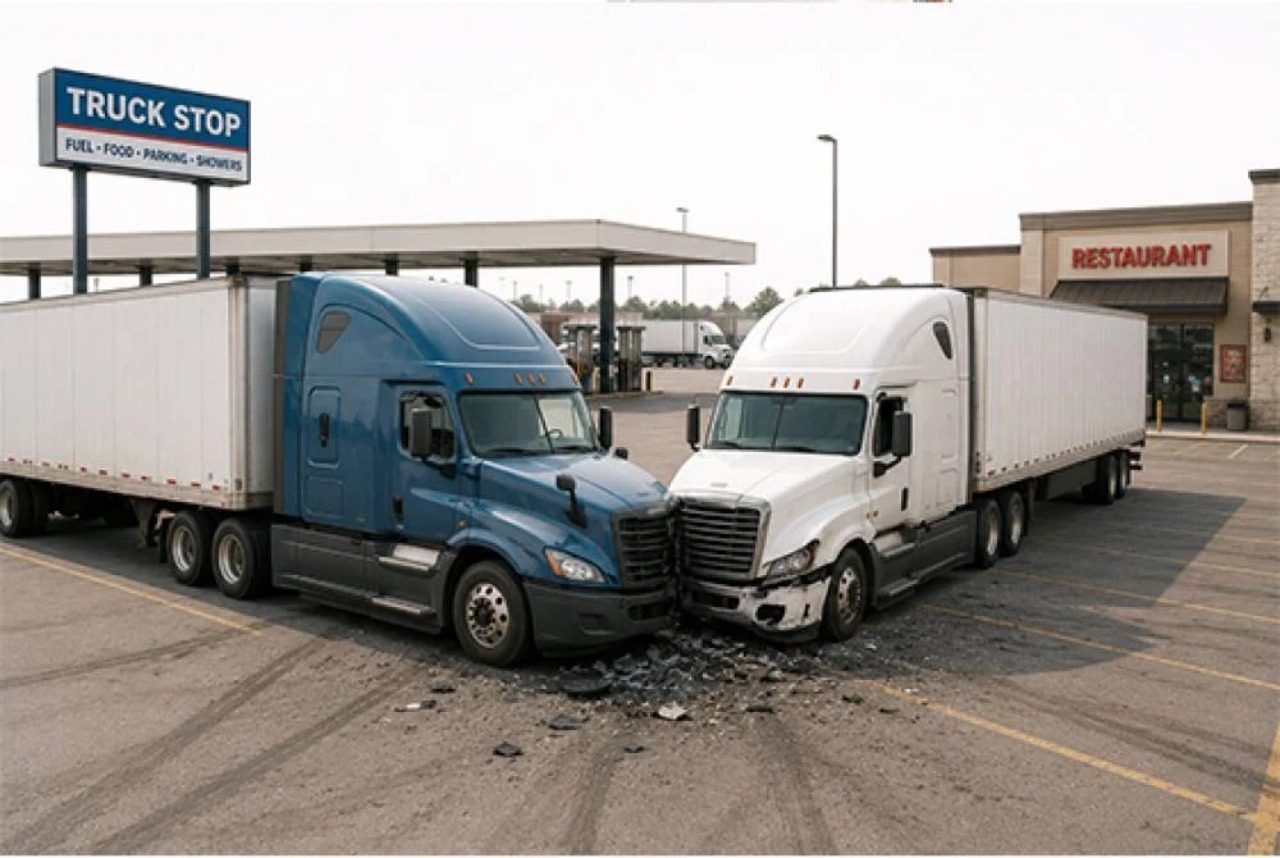
Businesses that build freight operations entirely through direct carrier relationships learn the limits of that approach from specific experiences rather than foresight: a carrier that raises rates mid-contract when promised volumes don’t materialize, or a routing error that nobody catches because the internal team lacks the visibility tools to flag it before a shipment goes wrong. These aren’t hypothetical scenarios. They’re the events that push growing businesses to look for a different structure.
The SBA Office of Advocacy has identified supplier scaling as a structural pressure point for small businesses participating in domestic supply chains. Freight is one expression of that pressure, and it behaves differently from staffing or procurement because costs are often non-linear. Adding a second carrier doesn’t double your freight capacity in any meaningful operational sense. Managing two carrier relationships well regularly takes more than twice the administrative effort of managing one, and adding a third or fourth multiplies the complexity faster than it multiplies the actual capability.
What Compliance Looks Like in Practice

Most small businesses encounter a layer of freight regulation for the first time when they begin working with third-party brokers or freight forwarders at any meaningful scale. The regulatory environment around freight brokerage involves bonding requirements, liability provisions, and financial responsibility rules that aren’t obvious to businesses that previously handled everything through direct carrier relationships. The complexity isn’t insurmountable, but it catches a lot of companies off guard when they start moving freight through intermediaries for the first time.
The Federal Motor Carrier Safety Administration sets out the financial responsibility requirements for freight brokers and forwarders, covering how much coverage is required and what happens when a broker fails to pay. For a growing business vetting third-party logistics partners, understanding those requirements shifts due diligence from whether a carrier seems reliable to whether the broker working with that carrier is properly registered and bonded, a distinction that matters considerably more than it initially seems.
Building Freight Infrastructure That Holds
The businesses that handle this well tend to make one early decision correctly: separating the question of which carrier moves a specific shipment from the question of how freight is managed overall. These don’t have to be the same system, and treating them as distinct problems opens up considerably more options. It also makes the operation easier to improve incrementally. You can switch the carrier selection platform without rebuilding the reconciliation workflow, and you can improve tracking without renegotiating carrier relationships from scratch.
Carrier selection can stay dynamic, routed through a platform that picks the best option for a given lane, weight class, and delivery window. The management layer, covering tracking, invoicing, reconciliation, and exception handling, can be standardized in a way that doesn’t depend on any particular carrier’s tools or communication style. The businesses that get this right aren’t usually the most sophisticated logistics operators; they’re the ones that stopped rebuilding the same process every time their shipping volume increased by 30 percent. The sophistication shows up not in how many carriers they’re managing but in how clearly they can see what freight actually costs, by route, by shipment type, by season.